
In The Liners
Every song arrives with a story.
A song is never only a song. It is the drive home, the kitchen at midnight, the friend who played it for you first. In The Liners was an experiment in handing music from one person to another, with a sentence about why.
A project by John Jenkins. It ran through the summer of 2026, and has ended.
The name
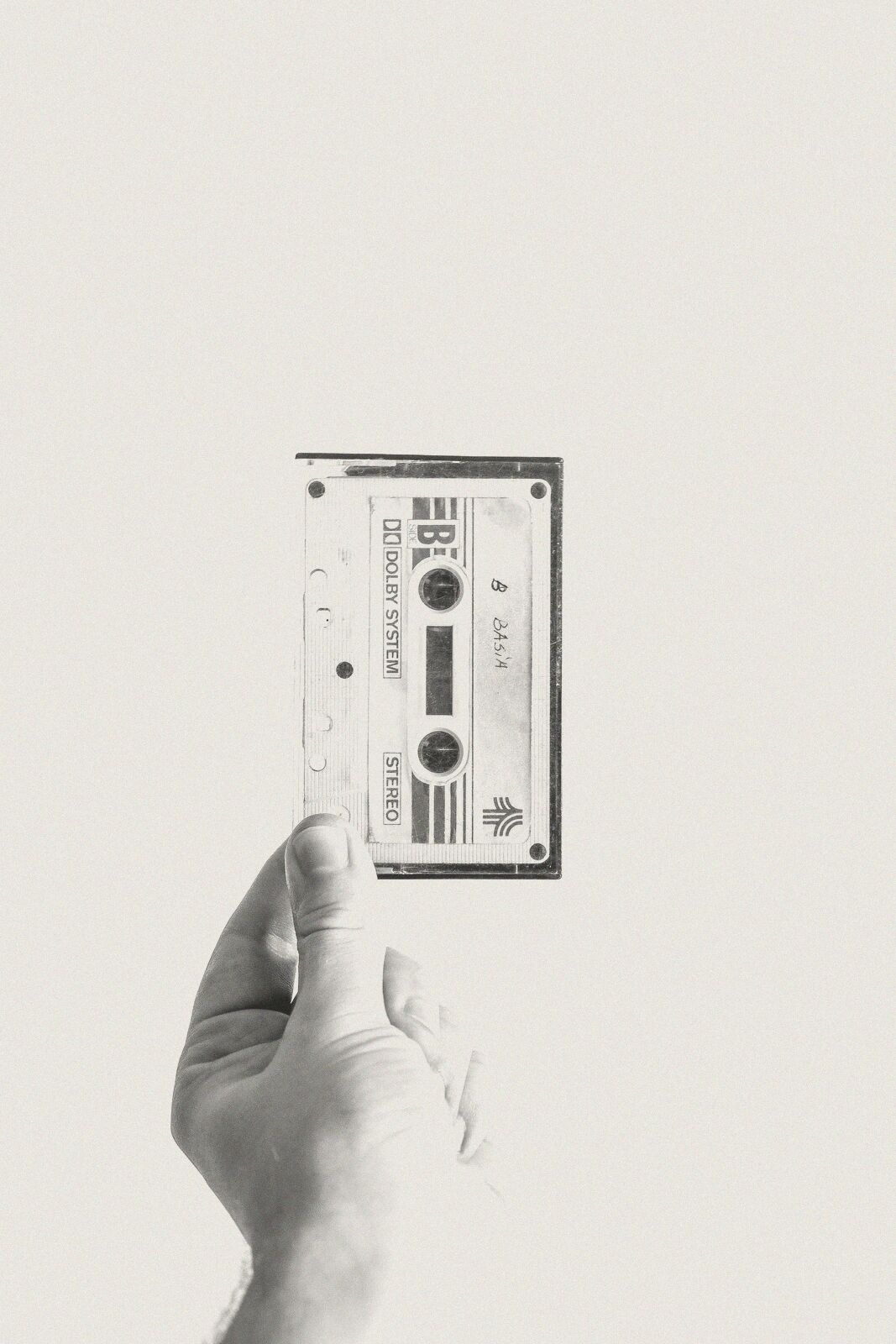
Liner notes are the part of a record that is about people.
The credits, the thank-yous, the story of the room it was made in. They are how a record tells you who was there. Streaming kept the songs and quietly dropped the liners, and now music mostly finds us because a system noticed a pattern.
In The Liners put the note back and made it personal. Not who played on the record. Who handed it to you, and what it means to them.
What music holds
We rarely love a song on its own. We love what it holds.
The first dance. The winter an album got you through. The track a friend put on in the car that you still cannot hear without seeing that road. Music holds on to feeling better than almost anything people make, and it arrives already full of other people.
That was the material. Not recommendations. Attachment.



How it worked
Three small rules, each one about a person.
-
01
Pass a song, with a sentence.
Choose one song, write one sentence about why, and send it to one person. Everyone had three passes a week, so every pass cost something to give and meant something to get.
-
02
See the hands it went through.
Whoever received it could pass it on with a sentence of their own. The record kept every hand it had been through, like the stamped card in a library book.
Try it: one song, passed along
Maya passed this to Priya
Starting with the one I have played most this year. No cleverness, just the truth.
Borderline Tame Impala
How it reached you
- 01Mayastarted it
- 02Priya
Example names and notes.
-
03
Make a playlist out of twelve people.
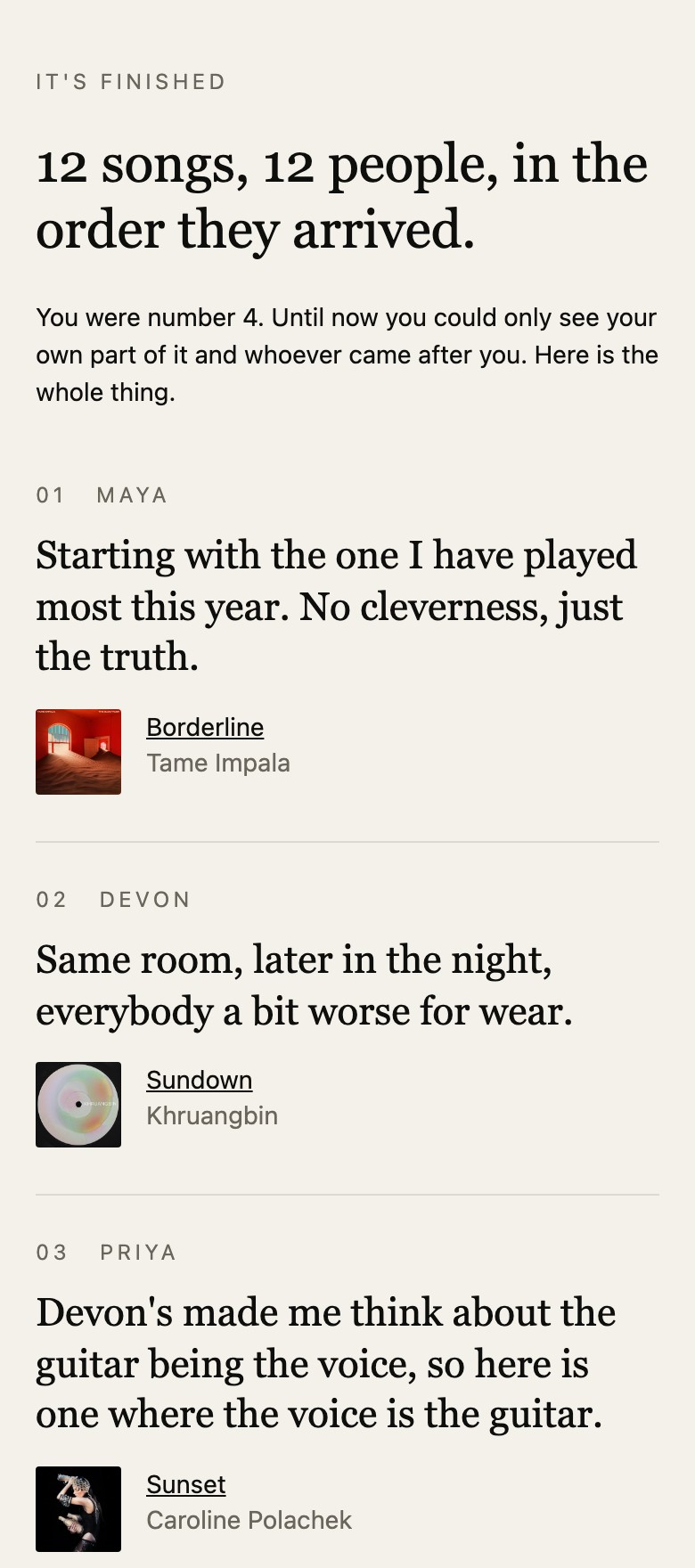
One song each, one person after another, each song chosen to follow the last. On your turn you could hear everything that came before, but you only saw the name of the person who invited you. When the twelfth song landed it locked, the credits appeared, and it became a public playlist.
Taste, with the names removed until the end.
Try it: a relay of twelve
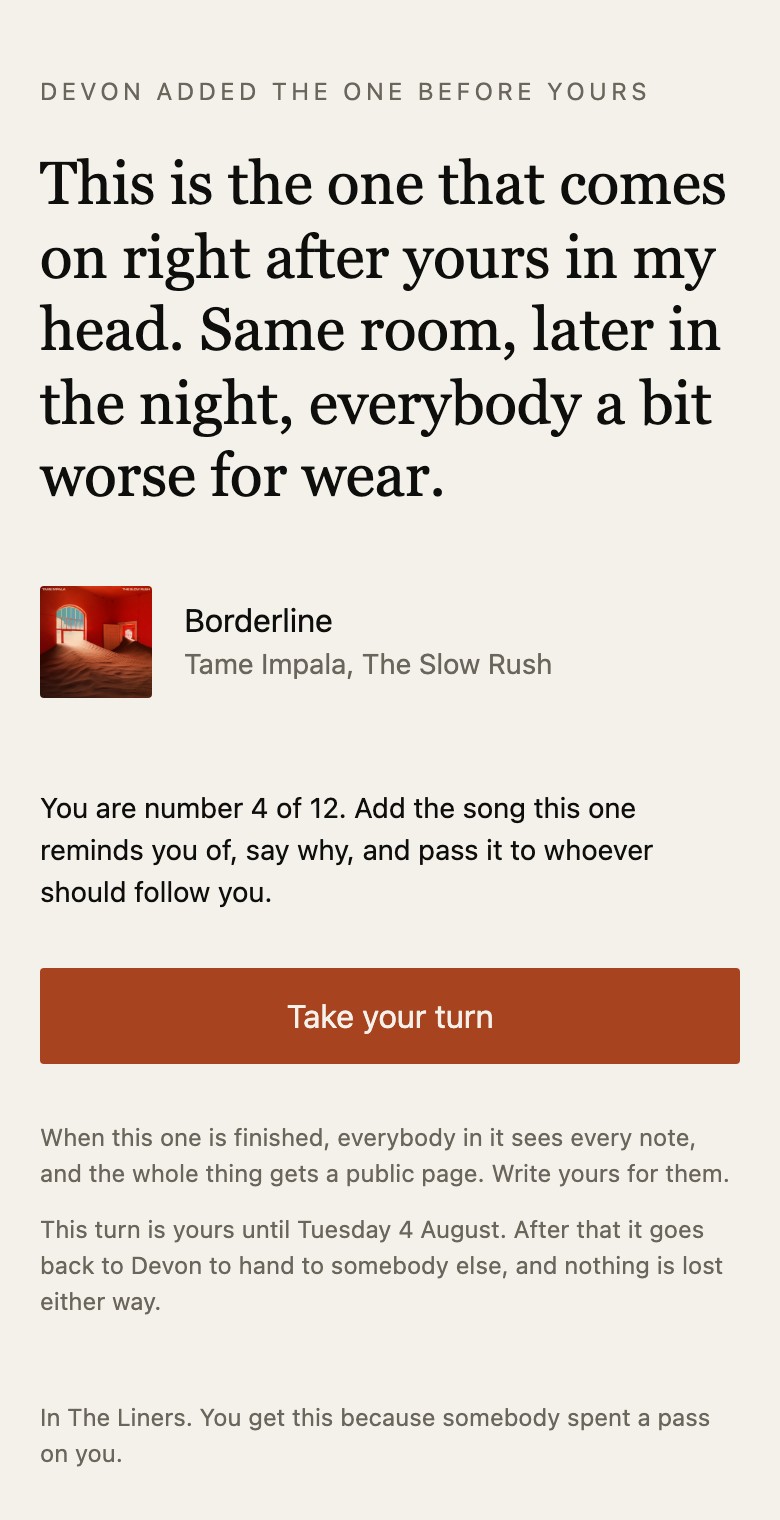
You are number 4 of 12
Example names and notes.
How it looked
Ink on paper, not a notification.
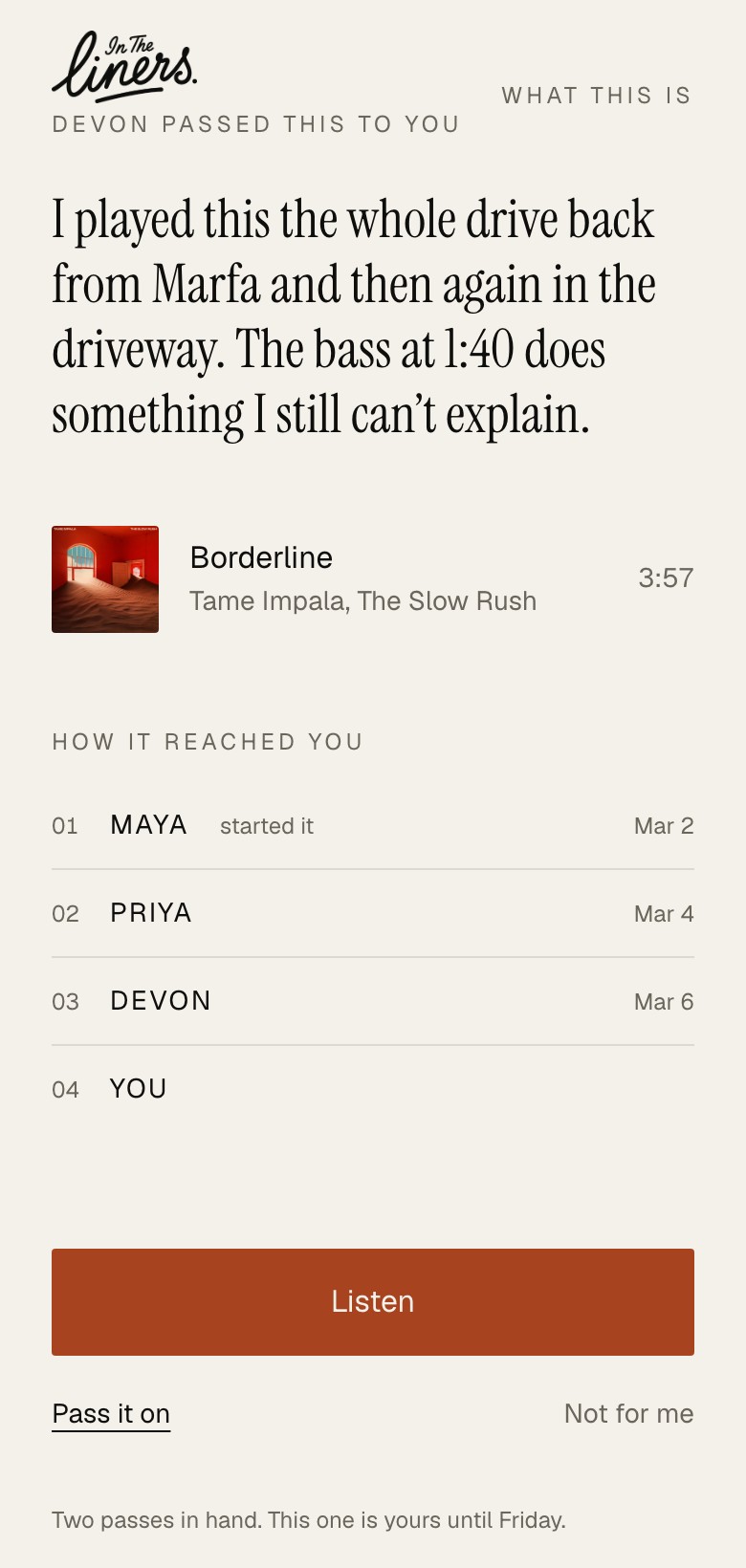
The design brief was one sentence: receiving a song should feel like a hand-addressed envelope. Four colors, taken from a warm page and the ink on it. A serif for anything a person wrote, a plain sans for everything else. On the screen that mattered most, the note was the largest thing, bigger than the song title and bigger than the album art.
Most of it arrived by email, because that is where people already open letters.

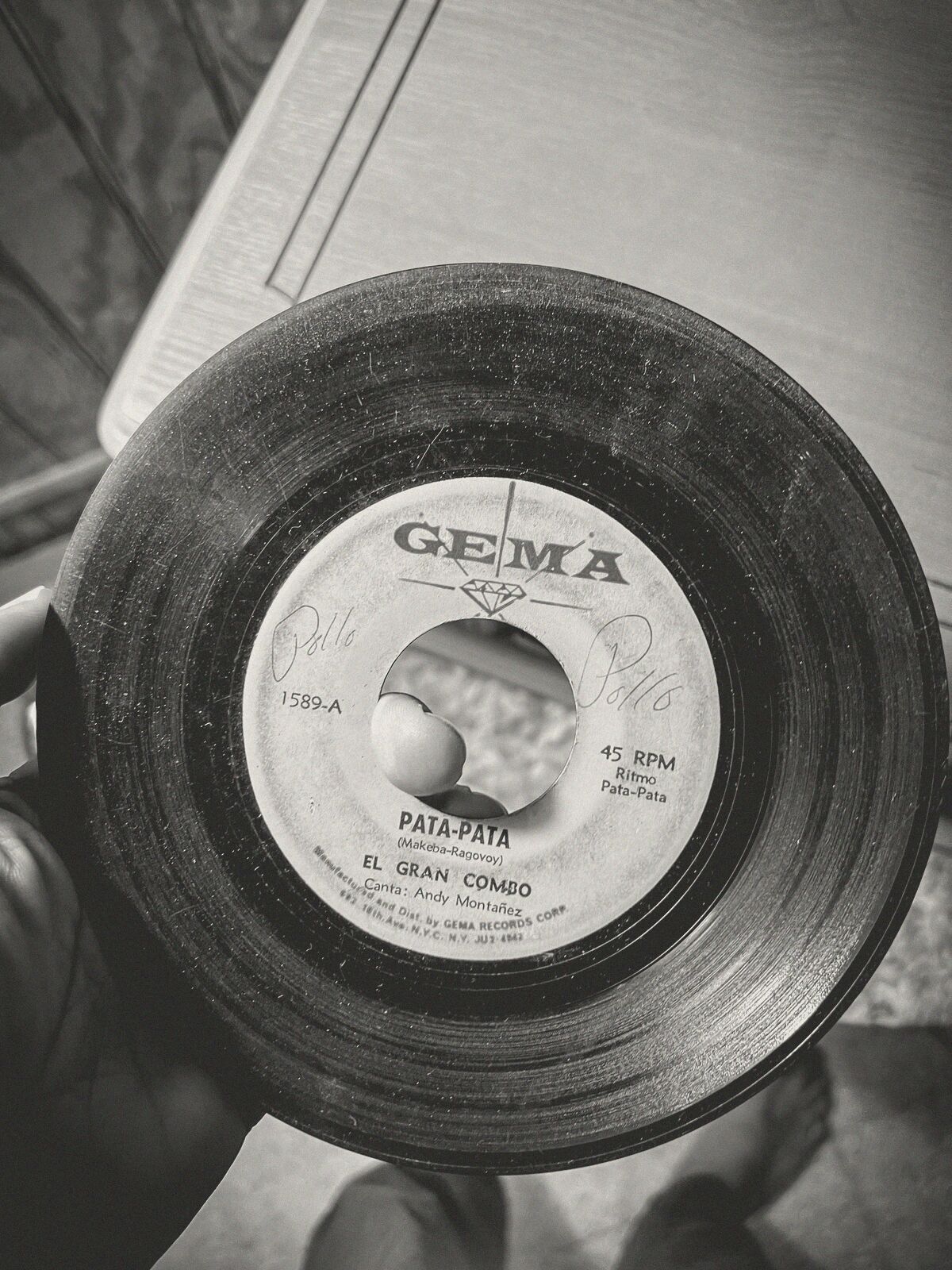
Some songs you only really hear with other people in the room.
Shared
A playlist made by twelve people is not a list.
It is a conversation with the order left in. Every song answers the one before it. Every note is somebody saying: this is what that made me think of. Put together, the notes read like a theme nobody planned.

What it taught
Songs arrive fine. The hard part is having someone in mind.
It ran quietly, among friends, through the summer of 2026. Every song that was handed to someone was opened. Fewer were handed on. That turned out to be the finding. Delivery was never the problem. What makes a song worth passing is the specific person you are passing it to, and that is not something software can supply.
When that person does exist, a single sentence about why is the most intimate thing a playlist can carry. In The Liners has ended. That part of it has not.